Alex Maskara
Thoughts, Stories, Imagination of Filipino American Alex Maskara
Welcome
~
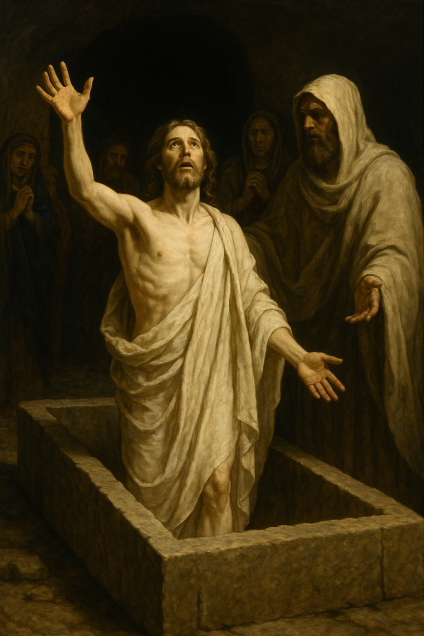
THE SEXLESS ARCHANGEL OF NO NAME
The Dilemma of Sam Cold
It was a vicious, almost pathological cycle. I would call upon God to protect me from the temptation of sex, only to succumb to it afterward because sex, after all, is a biological need. And because I had failed God, I felt compelled to punish myself by surrendering to more sex. More sex led to more guilt, more guilt to more prayers, more prayers to more sex, and so the cycle continued, endlessly.
It took me five days to finish reading One Hundred Years of Solitude by Gabriel García Márquez, and another five days before I resumed writing The Visions of St. Lazarus. During that interval, I spent considerable time examining my own life.
Lately, I seemed to be falling apart when it came to managing my everyday affairs. As any aspiring writer will admit, writing is not nearly as easy as it sounds. There is work to worry about, friends who barge in and out unannounced, relationships to nurture, and responsibilities to fulfill. Life has a way of interfering with even the most determined writer's ambitions.
I lay in bed one evening, wondering how I could eliminate unnecessary distractions and become more focused. For years, I had lived without much direction, governed largely by impulse and desire. Something had to change.
So I bought an organizer.
The thought of myself owning an organizer still makes me laugh, but believe it or not, the thing works.
Last night, I grew tired of moving from one room to another in my apartment—writing this novel in one room, reading in another, and sleeping in yet another. My apartment is ridiculously large for one person. Finally, I gathered my books, computer, and writing materials and moved everything into my bedroom, determined to finish this manuscript.
After reviewing the first seven chapters, however, I discovered just how loosely the narrative was constructed. Certain passages were vague, others contradictory, and still others seemed to wander without any clear destination. The story was hardly the tightly woven work I had imagined.
I mentioned these concerns to Lazaro, who promptly dismissed them.
"Our task is to synthesize thoughts and express feelings," he declared. "If we spend all our time worrying about grammar and correct English, we'll never get anywhere. Leave that to the English majors and people with creative writing degrees. The trouble with Filipino literature is that our educational system worries too much about grammar and structure and too little about the heart of composition."
"Whatever," I shrugged.
And so, dear friends and readers, I return to my manuscript, liberated from the tyranny of inconsistent verb tenses, misplaced modifiers, and grammatical imperfections.
After all, perfection is hardly the point of fiction.
The Patients of Dade Rest
As I narrated in the previous chapter, before our little intermission, Lazaro had returned to the duties demanded by his profession.
He checked vital signs, reviewed medication orders, changed bedsheets, and helped patients transfer from their beds into wheelchairs. Throughout these routines, he tried to ignore their incessant moaning.
Ah, the moaning.
Anyone who has worked in health care knows that sound. It is often the sound of surrender, the exhausted plea of someone who has endured too much suffering.
Leave me alone. Let me die.
There can be a strange comfort in surrendering to death. The bed is warm, the muscles are relaxed, and the body no longer has to struggle against its own deterioration. For someone terminally ill, why abandon that comfort?
Compare it with the exhausting business of remaining alive: getting out of bed, moving, eating, urinating, defecating, and enduring the endless demands of a failing body.
Yet one must live, if only to witness another beautiful night or the splendor of another sunrise.
And so Lazaro continued his work.
With Jeff's assistance, he helped the patients out of bed and settled them into wheelchairs and reclining chairs. Their bodies were frail, their muscles wasted from prolonged immobility. Their limbs had lost much of their strength, and patches of reddened skin suggested the beginning of pressure injuries. Some had been confined to their beds for so long that even sitting upright required considerable effort.
Together, Lazaro and Jeff wheeled them toward the veranda.
Something extraordinary happened along the way.
As the patients approached the veranda overlooking the secret garden, their bodies began to undergo a mysterious transformation. By the time they reached the open air, the change was unmistakable.
The garden itself was no longer visible to Lazaro. If I remember correctly, he had been granted only one opportunity to see it.
But the patients seemed to see something he could not.
They smiled. Their faces relaxed. They drew deep breaths as though breathing freely for the first time in years.
Then one of them spoke.
"Open the bottle of wine!"
His voice rang with unexpected delight.
Once again, Lazaro found himself witnessing a mystery beyond his comprehension.
The patients' chairs were arranged around a mahogany table, with one exception.
Sam Cold had chosen to sit apart.
But more about him later.
Jeff disappeared into the kitchen and returned carrying seven wineglasses, a bottle of wine, and a vase filled with flowers. He arranged everything on the table and began pouring.
As the patients drank, another transformation occurred.
Their emaciated bodies gradually filled out. Their hollow cheeks became rosy, their pale lips regained their color, and their voices acquired a richness and eloquence that seemed impossible only moments earlier.
Soon they were exchanging stories in a language that appeared to belong entirely to them. Their experiences, though deeply personal, seemed to echo one another, as though each story contained fragments of every other life.
They laughed, reminisced, and celebrated.
All except Sam Cold.
The Isolation of Sam Cold
Sam remained in a distant corner, separated from the others by more than a few feet of space.
His heart was breaking.
He had experienced moments like this many times before. Whenever he found himself among groups of gay men, he inevitably retreated into some lonely corner, unable to participate fully in their conversations.
Despite having AIDS, Sam knew surprisingly little about the social world of gay men. Or perhaps he knew enough but had never learned how to belong to it.
What could he possibly share with them?
His isolation had little to do with their rejection of him. It came from a fear that had haunted him since his youth.
He was afraid of losing God.
Like a priest who avoids looking at a beautiful woman for fear of temptation, Sam had spent much of his life struggling to protect his spiritual convictions from his physical desires.
As a young man, he had vowed to live a monastic and celibate life. But he could neither explain that vow to the gay men he encountered nor consistently honor it himself.
He was, after all, human.
The result was a profound confusion that prevented him from enjoying the companionship of the others.
Through his encounters with gay men, Sam had discovered something that should have been obvious: no two gay men were alike.
Just as among heterosexuals, there were gay men who celebrated sex, others who devoted themselves to the arts, others who pursued science, politics, philosophy, or humanitarian causes. One might spend his life cultivating roses, while another might devote himself to mapping the geography of wars.
And Sam?
Sam Cold had chosen the road less traveled.
He wanted to celebrate God.
But how could a sexually active gay man celebrate God when he had been taught to regard his own desires as sinful?
Had he been heterosexual, he believed, he might have resolved his dilemma through the sanctity of marriage. But the religious teachings he had absorbed offered him no comparable refuge.
Instead, he became trapped in a vicious, almost pathological cycle.
He would pray for protection against sexual temptation, only to surrender to his desires afterward. Having surrendered, he would feel that he had betrayed God. His guilt would become so unbearable that he sought punishment through further sexual encounters, as though another transgression might somehow justify the first.
More sex produced more guilt. More guilt drove him to prayer. Prayer renewed his determination to abstain, but desire eventually returned, and the entire cycle began again.
In time, sex ceased to be a source of pleasure. It became the battlefield upon which Sam fought an endless war between good and evil.
Sometimes, consumed by self-loathing, he would awaken in a stranger's bed, scarcely remembering how he had arrived there or who lay beside him. He would quietly dress and leave without a word of farewell.
Eventually, Sam's religious life became almost entirely preoccupied with sex.
The more he prayed, the more he feared temptation. The more he feared temptation, the more powerful it seemed to become.
He felt as though he were perpetually standing on unstable ground.
One gay man, exasperated by Sam's anguish, had once told him:
"I pity you. You've allowed a homophobic Church and religion to dominate your life. You can call upon God by every name you know, but sooner or later, you'll still find yourself kneeling before another man, sucking his cock."
At a party one evening, Sam encountered a sixty-year-old gay man who offered an entirely different philosophy.
"Enjoy it while you're young," the older man advised. "When you reach my age, opportunities won't come so easily."
Such conflicting messages only deepened Sam's confusion.
Whenever he felt overwhelmed, he retreated into the security of the religious icons he had collected throughout his life.
Rescue me, he prayed.
Help me, he begged.
Yet after every prayer, he seemed to surrender more completely to the very desires he had asked God to remove.
And now, seated in his lonely corner of the veranda, Sam Cold was sweating and trembling, tormented by the happiness of the men around him.
Why couldn't he be happy like them?
Why did companionship come so naturally to others while he remained imprisoned within himself?
Across the veranda, the other six patients had fallen into a trance. Their eyes were fixed upon something Lazaro could not see.
Lazaro watched them helplessly before turning his attention back to Sam.
The Days of Wine and Roses
"This is beautiful," a voice suddenly declared.
Lazaro looked toward the mahogany table.
The faces of the six patients had begun to merge, becoming identical, as though they were clones of a single person. A brilliant light descended upon them, surrounding their heads like an enormous halo.
When they spoke again, their voices had become one.
It was a strange, mechanical voice, reminiscent of an alien transmission from Star Trek.
"What is the use of gay life without wine and roses?"
The six faces smiled simultaneously and turned toward Sam Cold.
"I don't know," Sam answered defensively. "Everything around me seems so strange. I'm sorry I can't share your happiness, but I simply don't feel what you feel. It's funny. I feel as though I belong here, and yet I don't belong at all."
"We understand," the voice replied. "We are gay men, Sam. Don't forget that. Like the rest of humanity, we differ in our opinions, beliefs, and experiences. But come here. Sit beside us. Let us remember the days of wine and roses. Tell us, Sam Cold, what troubles you?"
Sam lowered his head.
"Forgive me, my friends, but I can no longer call upon God for the strength I desperately need."
He covered his face with his hands.
"I can no longer bear the sorrow of being gay. I'm exhausted from trying to reconcile our suffering with the justice of God. I feel completely defeated."
The voice answered gently.
"Then you have come to the right place, Sam. You belong here with us.
"You may pray as often as you wish. You may suppress your desires, deny the reality of your nature, or announce your sexuality to the entire world on CNN. But sooner or later, you will seek our company.
"Do you know why?
"Because we understand you. We will not cast you out, condemn you, or humiliate you. Every gay man, at one time or another, has encountered some measure of the struggle you are experiencing.
"How many have wrestled with their sexual desires and believed themselves defeated? How many have sought comfort in Christ and religion, only to discover that the institutions claiming to represent Him have made them feel unwelcome?
"How many have distanced themselves from other gay men, even condemned their own kind, in an attempt to prove that they were stronger, purer, or more deserving of God's love?
"Look at yourself, Sam. There you sit in your tiny corner, hugging yourself, trying to find warmth and comfort in your own arms. You are lonely, exhausted, frightened, and terribly sad.
"Come and sit with us.
"Whether you have AIDS or not, whatever your color, nationality, religion, social standing, or philosophy, you belong among us.
"Listen to what we have to say.
"God created gay people because He wanted us to bring beauty into His world. He wanted us to celebrate the days of wine and roses. He wanted us to laugh for Him.
"So let us speak of happier times. Let us remember who we were and who we are.
"Pour the wine. Smell the roses. Look upon the beauty of God's creation.
"Do not make God weep over your suffering anymore.
"You belong to Him, Sam, just as you belong to us.
"You may renounce every temptation of the flesh. You may withdraw into a cave and live as a hermit. You may devote your entire existence to eliminating the weapons of war and bringing peace to humanity. None of these choices will erase your place among us.
"Stop crying, Sam Cold.
"Remember the great men and women who came before us.
"Think of Alexander the Great, the conqueror whose affections extended to both men and women. Celebrate his greatness."
In the distance, Sam saw Alexander descending from the heavens, mounted upon a magnificent horse. Dressed in full warrior regalia and surrounded by the temples of ancient Greece, the conqueror smiled and waved at him.
"Think of Leonardo da Vinci and Michelangelo, those extraordinary lovers of beauty and humanity. Celebrate their genius."
The two Renaissance masters appeared before him. Michelangelo held a sculptor's chisel, while Leonardo carried a paintbrush. Both nodded in Sam's direction.
"Let us pour wine and gather roses in their honor. Let us claim the strength of those who came before us. Smile, Sam. Laugh. Celebrate!"
At these words, a drum began beating somewhere in the distance.
Trumpets joined it, followed by violins.
Then the twelve monks appeared, seated behind Sam Cold, each playing a different musical instrument.
A guitar began to strum.
Suddenly, the souls of the six AIDS patients rose from their bodies. Their spectral forms transformed into graceful ballet dancers suspended in midair.
They began dancing before Sam Cold.
The music sounded strangely familiar.
It was Malagueña.
The harp yielded to the guitar, the guitar to the flute, the flute to the violin, and finally the trumpet joined the swelling orchestra.
The dance grew faster and more elaborate until the spirits soared above the garden.
"Celebrate with us, Sam Cold!" the voice cried. "Remove the sadness from your face.
"Remember the gay men and women who made civilization more beautiful and life more worthwhile.
"Remember the gay soldiers who died in battle, who saved their comrades and sacrificed their lives in defense of freedom, democracy, and peace.
"Remember the gay holy men who devoted themselves to the service of God.
"Remember the thousands who died of AIDS, whose names and memories are preserved in memorial quilts.
"Dance with us, Sam.
"Dance with their spirits!"
The spectral dancers joined hands and began calling out the names of those who had died.
One by one, more spirits descended into the garden.
The Gathering of Souls
Lazaro could hardly contain himself.
He sensed an extraordinary spectacle unfolding before him, yet much of it remained hidden from his sight.
"Oh God in heaven," he cried, "let me see!"
At that very instant, the heavens opened.
The sky turned pink.
Before him stretched a silvery-white landscape where flowers sprang from the earth and gardens blossomed in every direction. Golden butterflies drifted from lily to lily. Dragonflies with brilliant green eyes darted around him, while flocks of birds perched in the trees, filling the air with their songs.
Lazaro was delirious with wonder.
Then the spirits merged into a single enormous wind.
He recognized it immediately.
It was the same mysterious wind he had encountered in his dream.
"This is marvelous!" he exclaimed. "You're the spirits who knocked at the gates of heaven! You're the ones who awakened me!"
For the first time, he could see them clearly.
The wind shattered into thousands of brilliant particles, each resembling a falling star. As the particles descended toward the earth, they transformed into human-sized spirits.
They came dressed in the garments of different civilizations and historical periods.
Some wore the traditional loincloths of African tribes. Others appeared in the armor of medieval knights. There were men and women in flowing robes, Japanese kimonos, Indonesian sarongs, and elaborate costumes from forgotten kingdoms.
Some wore laboratory coats, military jackets, or astronauts' spacesuits.
Lazaro saw a matador, a Mexican carrying a sombrero, an Argentine tango dancer, a Spanish flamenco dancer, and an Australian cowboy.
Others appeared in fashions representing nearly every period of human history.
A group dressed in bell-bottom pants and brightly colored shirts from the 1970s raised their fists and shouted:
"Remember Stonewall!"
Nearby, the souls of AIDS victims from the 1980s and 1990s sat quietly, draped in memorial quilts, their expressions solemn and contemplative.
Then Lazaro recognized several familiar faces.
"Isn't that Walt Whitman rolling around in the grass, laughing like a child?"
He turned and gasped.
"Oh my God! That's Oscar Wilde! And over there—that must be E. M. Forster talking to Marcel Proust!"
Oscar Wilde approached him, looking every bit the flamboyant Irish wit of his earthly days.
"Look at those two queers," Wilde remarked, pointing toward a shaded corner of the garden.
E. M. Forster sat regally beneath a large umbrella. His felt hat was perfectly shaped, and his shoes were polished to a brilliant shine.
At his feet reclined Marcel Proust, wrapped in blankets and wearing a French cap.
"Atchoo!"
Proust sneezed violently.
"Dammit! This pollen is going to trigger my asthma again."
Lazaro could not help overhearing their conversation.
"As I was saying, monsieur," Proust continued, "you would do well to forget this English Maurice of yours. He's already married and has forgotten you."
"Ha!" Forster exclaimed. "Maurice? Forget me?"
He straightened in his chair.
"Let me tell you something, my dear. Maurice is wandering somewhere in eternity looking for me. Surely you remember the ending of my novel. The old Maurice imagines his younger self and Alec together, still lingering in a corner of his memory. I assure you, he has not forgotten me."
Proust adjusted his blankets, unconvinced.
"I beg to disagree," Forster continued. "Maurice is looking for me."
"Hey, you two homosexuals!" Oscar Wilde shouted. "Would you kindly leave your little corner and come meet our friend Lazaro?"
"For goodness' sake, Oscar," Forster replied in his refined English accent. "All the boy needs to do is read our books. He'll discover everything we have to say."
"Get your ass off that chair. Now!"
Forster rose reluctantly and approached Lazaro.
Upon seeing him, his face brightened.
"My, oh my! Where did this exotic young man come from?"
"The Philippines," Wilde answered.
"Oh, how interesting!" Forster exclaimed. "Tell me, Lazaro, who is more popular in the Philippines—Oscar Wilde or moi?"
"Listen to him," Wilde said. "I am beyond comparison."
"Oh, hush, Oscar. For all I know, you were the first drag queen in the entire Western Hemisphere."
Wilde raised an eyebrow.
"And how, pray tell, did you arrive at that conclusion?"
"Have you forgotten? You were the first modern Salome."
"That was a play."
"A drag play."
Wilde threw up his hands.
"Oh, I could strangle you!"
Lazaro was overwhelmed.
Here he stood, surrounded by three of the greatest literary figures associated with gay history. He could scarcely believe his good fortune.
"Mr. Wilde, Mr. Forster, Mr. Proust," he began excitedly, "wouldn't it be wonderful if we could remain together like this? Could I have the privilege of your company for all eternity?"
The three authors exchanged regretful glances.
"Oh, Lazaro," one of them answered, "we would wish for the same thing. But the laws of God must prevail."
With those words, they vanished.
In their place appeared George Balanchine, followed by the celebrated fashion designer Gianni Versace, then Rock Hudson in all his youthful glory.
And finally, Liberace emerged, glittering beneath the weight of his jeweled costume.
The figures rose into the air, joining the multitude of spirits circling above Lazaro.
Their individual faces gradually dissolved into an immense stream of light.
The light became wind.
The wind became a vast spiral of swirling clouds and lightning.
Lazaro found himself standing at the center of a supernatural storm.
Then, from within the spiraling light, an angel appeared.
Was it male or female?
Lazaro could not tell.
The Archangel of No Name
The angel spoke.
"They return to you, Lazaro—the souls compressed within the bottle of your heart. They speak so that you will not forget. Release the bottle of wind."
Lazaro stared at the mysterious figure.
"Who are you?"
"I am the Archangel of No Name. I have come to announce the awakening of gay souls.
"They come to wipe the tears from your eyes. And you, Lazaro, shall write my words.
"Gay people will reclaim their rightful place in God's creation. They will be accepted. They will no longer be marginalized. They will recover the dignity and glory that have been denied them."
As the Archangel spoke, the surrounding light intensified until it became brighter than the sun. Lazaro shielded his eyes.
"Look at this object," the Archangel commanded.
A glass prism appeared in the angel's hand.
The brilliant white light of the gathered souls passed through the prism and emerged in a spectrum of colors—red, orange, yellow, green, blue, indigo, and violet.
The colors of the rainbow.
"What does this mean, Lazaro?"
Lazaro blinked.
"It's my high school physics experiment."
"I know that!" the Archangel snapped. "But what does it mean to you spiritually?"
Lazaro was speechless.
The Archangel continued.
"This is the reality of creation. What appears to be a single beam of white light contains a multitude of colors. The earth beneath your feet consists of layers, and the universe itself is composed of particles in perpetual motion.
"Do you imagine that the space between heaven and earth is nothing but empty wind?
"Everything in creation moves, changes, and transforms.
"Everything is part of God's eternal dance.
"And here is the spiritual truth, Lazaro: humanity cannot be understood merely through opposites and extremes. Between those extremes lies an entire world—the world of the In-Between.
"Human beings cannot always be divided neatly into masculine and feminine, male and female. Some possess qualities traditionally regarded as masculine, others qualities regarded as feminine, and still others embody both in varying degrees.
"Like the colors within a beam of light, human nature exists in countless variations.
"It is a grave mistake to reduce the mystery of humanity to the possession of a penis or a vagina, and then condemn those whose identities or desires do not conform to society's expectations."
The Archangel raised a hand.
"Arise, Lazaro, and listen carefully.
"God does not judge the worth of your soul by your sexual orientation.
"Your physical body, including its sexual characteristics, comes from dust, and to dust it shall return.
"What matters to God is the spirit that inhabits that body, the life it has lived, and how it returns to Him at the end of time.
"Look at the spirits surrounding you, Lazaro.
"Ask yourself: Do you believe that we, the spirits, concern ourselves with sexual distinctions?
"In the presence of God, we are sexless."
The Other Force
While the Archangel spoke, one color of the rainbow began to grow brighter than the others.
Red.
At first, it was merely a brilliant streak of light. Then it spread across the heavens, consuming the remaining colors.
Within moments, the sky had turned the color of blood.
The garden seemed to burst into flames.
The swirling wind of souls began to moan.
The spectral dancers descended and returned to their physical bodies. The seven AIDS patients, including Bill and Sam Cold, gradually lost the beauty and vitality they had briefly regained.
Their cheeks became hollow again. Their limbs shrank, their skin turned pale, and their bodies collapsed into the familiar frailty of terminal illness.
The monks' music grew discordant. Violins screeched, trumpets blared off-key, and the drums fell into a chaotic rhythm.
Then the monks vanished altogether.
The veranda of Dade Rest filled with shrieks, curses, and anguished cries.
Another Force had arrived.
Lo and behold!
The Devil appeared atop the mahogany table.
He reclined comfortably, displaying wings and a tail shaped like a penis. In one hand, he held the empty bottle of wine.
"And why," he asked with a mocking smile, "should you listen to that ridiculous Archangel of No Name?"
He swung his legs over the edge of the table.
"Why would you exchange the pleasures of your body for something as foolish as God?
"There is no spirit. There is no God.
"Listen to me instead.
"You live only once, and the pleasures of the flesh are yours for only a brief moment. Enjoy them before the endless nothingness begins.
"Life is ruled by sex. Trust me—the bigger or the tighter, the better!"
He rose to his feet.
Before Lazaro's astonished eyes, the creature transformed into a breathtakingly handsome man—tall, muscular, completely naked, and possessed of the longest penis Lazaro had ever seen.
"Worship me," the Devil declared, "and I shall reveal the true meaning of pleasure.
"And if the world condemns you for enjoying yourself, then be angry!
"Yes, I want you to be angry.
"Let lust consume you. Let anger give you strength. Destroy everything that stands between you and your desires!"
The Devil laughed.
Perhaps it was this confrontation between the two ancient Forces—good and evil, spirit and flesh, restraint and desire—that finally broke Sam Cold.
By now, he had returned to his wheelchair, reduced once more to a skeletal figure. His eyes bulged from their sockets, saliva spilled from his trembling lips, and his thin arms hung uselessly at his sides.
The brief happiness he had witnessed had disappeared. The wine, the roses, the dancers, and the magnificent procession of souls were gone.
In their place remained the same terrible conflict that had tormented him throughout his life.
He could no longer bear it.
With whatever strength remained in his wasted body, Sam Cold screamed:
"FUCK YOU ALL! LEAVE ME ALONE!"
Lazaro bit his tongue.
He remembered Jeff Kaploski's warning about the mysterious Forces inhabiting Dade Rest.
The warning had not been imaginary.
Lazaro had encountered those Forces before, more times than he cared to remember.
And now, once again, they had revealed themselves.
2026-10-25 04:52:25
visions

“I am what I am, I am my own special creation…”
I began humming the popular Gloria Gaynor tune, an anthem among Manila's gay community. Roberto ignored my singing and continued talking, seemingly too absorbed in his thoughts to notice my attempt at humor.
“You know, I was raised by a mother who was obsessed with having a baby girl. She lived under the illusion that I was the daughter she had always wanted.”
“Don't worry,” I quipped. “You are.”
He either didn't hear me or chose to ignore me.
“I grew up confused. In her little world, I was her beautiful baby girl, always dressed in pink, with curly hair and all that sentimental nonsense. All that shit.”
“And now you're a fag, a sward, a fruitcake, a fairy, a tootsie, and everything else!” I added, unable to resist.
He slapped the back of my neck.
“Stop it!”
“Ouch! Roberto, face the truth.”
“I'm trying. Hard. Can't you see?”
“It always begins with this kind of brooding. Eventually, you'll get over it. They call it coming out. Go ahead. I'm listening.”
He sighed.
“The trouble is, when illusion clashes with reality, you try to escape both by creating another illusion. And when that one falls apart, you create another. It goes on and on, until you can no longer distinguish what is real from what you've invented. Jeff, I'm tired.”
“Well, at least that makes you creative, doesn't it?” I said.
Then, for reasons I couldn't quite explain, I added, “By the way, my real name is Antonio Salamanca.”
What the hell. I don't feel like Jeff tonight. I feel lousy, rotten, and penniless. I might as well use my real name.
Roberto barely acknowledged my confession. He was too deeply immersed in his own.
“Sometimes,” he continued, “an illusion becomes so beautiful, so much a part of your life, that losing it feels like losing someone you love. And its death demands a long period of mourning.”
“Ain't that the truth?” I replied, my sarcasm beginning to lose its edge.
I was starting to understand him. Beneath his carefully chosen words was a pain that somehow found its way into me. I forced a laugh, hoping to lighten the atmosphere, but sadness had settled over his face. He looked terribly depressed. Perhaps he would get over it in time. Perhaps not.
As for illusions and reality, I had always thought they resembled old soldiers. They never really died; they simply faded away. Or was that what General MacArthur had said? Or John Wayne? I couldn't remember which. My mind had a peculiar habit of wandering into irrelevant territory whenever a conversation became too serious.
Roberto, however, was not finished.
“When I was in premed, I told myself that if I had to make a decision about my sexual orientation, I should make it then and there. I wanted to settle the matter once and for all. I would either become straight or accept being gay for the rest of my life. I refused to accept the latter.”
He paused, staring toward Manila Bay.
“I tried to surround myself with people who would accept and respect me for trying to live as a straight man. I thought that if I could build the right friendships, adopt the right behavior, and find the right woman, everything would eventually fall into place. It was my way of surviving.”
“And?”
“I failed. I tried to find a girlfriend, but that failed too. Eventually, I gave up trying to become someone I wasn't. I withdrew from people and began living a solitary life. Call it selfishness, cowardice, or whatever you want. I simply got tired of pretending. And now, here I am, abandoned and lonely.”
A visible strain crossed his face. Yet something extraordinary was happening. As the confidence and artificial charm slowly disappeared, another face began to emerge, one more vulnerable and, strangely enough, more beautiful than the one I had admired earlier.
The Nameless Adonis was gone. Before me sat Roberto, a man burdened by a lifetime of expectations, disappointments, and impossible attempts to reconcile himself with the world.
“Still,” he continued quietly, “even in isolation, the past refuses to leave me alone. Sometimes I think it finds happiness in my misery.”
“Certainly,” I murmured.
It was the only word I could manage. I wanted to comfort him, but I was also struggling to conceal the effect his words were having on me. Our eyes met, and for a moment I couldn't look away.
My thoughts began wandering again.
Who would understand?
Who would ever understand men like us in this city called Manila?
Around us, the night seemed to deepen. Along the seawall, bushes and tall grasses swayed gently in the breeze. Moonlight filtered through the thick foliage, illuminating the secluded places where men gathered to pursue desires they could neither openly acknowledge nor entirely suppress.
Here, along the dark stretches of the bay near Lawton, the city appeared to have two separate lives. There was the Manila of daylight, with its churches, schools, respectable families, and rigid expectations. Then there was this other Manila, concealed beneath the trees, where lonely men searched for affection, companionship, or perhaps nothing more than a fleeting escape from themselves.
Thank God for the moonlight. At least it revealed something of the world that darkness tried to hide.
Silence settled between Roberto and me as we gazed across Manila Bay. The distant lights flickered over the water, and the breeze carried the faint sounds of a city that never completely slept.
For a while, nothing seemed to matter except the images forming in our minds. Reality had retreated, leaving behind memories, fantasies, illusions, and the masks we wore to survive.
Perhaps Roberto was right. Perhaps we spent much of our lives constructing beautiful illusions, only to suffer when reality finally demanded their destruction.
I could feel my eyelids growing heavy. Roberto's voice became increasingly distant, blending with the gentle rustling of leaves and the murmur of the sea. Before I knew it, I had fallen asleep.
And then Roberto entered my dream.
He stood before me dressed entirely in white. Behind him stretched the quiet expanse of Manila Bay, illuminated by a full moon suspended over the water. His face was calm now, free of the anguish I had witnessed earlier. He seemed almost weightless, as though the burdens of his life had finally been lifted.
He began to speak.
“The full moon is moving westward, casting long shadows over everything solid on earth. Tonight, the moon belongs to me alone. It is my only love, my only friend. It is as sorrowful as the gray clouds drifting across the sky, yet as joyful as the flickering lights dancing upon the bay.
“No one can take its beauty away from me. Somewhere within that light, I imagine someone watching over me, someone who understands without asking questions, someone who loves without demanding that I become somebody else.
“One day, I will rise and travel upon its light. I will dance to the gentle music of the sea breeze, and when I grow tired, I will rest among the peaceful branches of coconut trees.
“And perhaps there will come a time when this moonlit night will never end. Together, we will travel from star to star, from moon to moon, from galaxy to galaxy, from one universe to another, until time itself disappears and eternity becomes our home.”
His voice faded into the night.
I don't remember what happened afterward.
What I do remember is waking up to the unmistakable arrival of another day.
The first sounds that reached me were footsteps. Rapid, rhythmic footsteps, followed by the occasional voices of men and women passing nearby. My eyes opened slowly, and through my blurred vision I could make out people jogging and briskly walking along the grounds of the Cultural Center of the Philippines.
Morning had arrived.
I was lying on the grass somewhere within the CCP complex, my back damp from the dew. I sat up, feeling stiff and disoriented. A few early-morning exercisers glanced in my direction, some appearing amused by the sight of a young man who had apparently spent the night outdoors.
I must have looked pathetic, caught unprepared by daylight, alone and without any obvious destination.
My first instinct was to check my knapsack and wallet. Everything was still there. Nothing had been stolen, although there wasn't much worth stealing in the first place.
I was still penniless.
Then I remembered Roberto.
Where had he gone?
I looked around, hoping to find him sitting somewhere nearby, perhaps watching the sunrise or waiting for me to wake up. But he was nowhere in sight.
I regretted not asking for his telephone number. Despite my teasing and occasional sarcasm, I had enjoyed talking to him. He was an interesting man, and his confessions had revealed a depth of feeling I hadn't expected from our casual encounter.
Perhaps he had simply grown tired of talking to someone who kept falling asleep. Perhaps he had realized that I was a poor listener, more interested in making jokes than understanding his suffering.
Or perhaps he had decided that our conversation belonged to the night and should end with it.
Whatever his reason, he was gone.
Now is the time to be a man.
I said this to myself as I stood up, brushed the grass from my clothes, and began walking slowly toward Vito Cruz.
I checked my watch. It was five o'clock in the morning.
I should have left earlier. It was Sunday, and I knew what Sundays meant at the CCP complex. The place would soon become a sprawling arena of joggers, walkers, cyclists, and people engaged in every imaginable form of exercise. Some came to improve their health, others to socialize, and still others to be noticed—or to notice someone else.
Manila had its own peculiar rituals, and Sunday mornings at the CCP were among them.
Before leaving, I turned around for one last look at the thick canopy of trees lining the seawall. Only a few hours earlier, those shadows had sheltered the secret encounters of men who could not openly live the lives they desired. Beneath those branches, the night had been alive with movement, whispers, furtive glances, and the quiet transactions of human longing.
Now the place looked entirely different.
The bushes were still. The shadows had vanished. Dragonflies hovered among the leaves, while butterflies fluttered around the flowers. Sunlight was beginning to reach the spaces that moonlight had barely touched.
There was no trace of the peculiar gathering I had witnessed the night before.
It seemed almost impossible that the same place could contain two such different worlds within a matter of hours. Had Roberto and I been the only witnesses to that strange nocturnal gathering? Had everything really happened, or had the night already begun transforming itself into another one of those illusions he had spoken about?
I stood there for a moment, studying the deserted grounds.
How barren everything looked now. How ordinary. How empty.
The party was over.
And Roberto, the beautiful, troubled stranger who had spent the night revealing the hidden sorrows of his life, had disappeared with it.
As I resumed walking toward Vito Cruz, one final question lingered in my mind.
Where could his home be?
And, perhaps more importantly, was there anywhere in Manila where a man like Roberto could truly feel at home?
2026-10-25 04:33:28
masquerade
Visions of St Lazarus Chapter 8
THE SEXLESS ARCHANGEL OF NO NAME
The Dilemma of Sam Cold
It was a vicious, almost pathological cycle. I would call upon God to protect me from the temptation of sex, only to succumb to it afterward because sex, after all, is a biological need. And because I had failed God, I felt compelled to punish myself by surrendering to more sex. More sex led to more guilt, more guilt to more prayers, more prayers to more sex, and so the cycle continued, endlessly.
It took me five days to finish reading One Hundred Years of Solitude by Gabriel García Márquez, and another five days before I resumed writing The Visions of St. Lazarus. During that interval, I spent considerable time examining my own life.
Lately, I seemed to be falling apart when it came to managing my everyday affairs. As any aspiring writer will admit, writing is not nearly as easy as it sounds. There is work to worry about, friends who barge in and out unannounced, relationships to nurture, and responsibilities to fulfill. Life has a way of interfering with even the most determined writer's ambitions.
I lay in bed one evening, wondering how I could eliminate unnecessary distractions and become more focused. For years, I had lived without much direction, governed largely by impulse and desire. Something had to change.
So I bought an organizer.
The thought of myself owning an organizer still makes me laugh, but believe it or not, the thing works.
Last night, I grew tired of moving from one room to another in my apartment—writing this novel in one room, reading in another, and sleeping in yet another. My apartment is ridiculously large for one person. Finally, I gathered my books, computer, and writing materials and moved everything into my bedroom, determined to finish this manuscript.
After reviewing the first seven chapters, however, I discovered just how loosely the narrative was constructed. Certain passages were vague, others contradictory, and still others seemed to wander without any clear destination. The story was hardly the tightly woven work I had imagined.
I mentioned these concerns to Lazaro, who promptly dismissed them.
"Our task is to synthesize thoughts and express feelings," he declared. "If we spend all our time worrying about grammar and correct English, we'll never get anywhere. Leave that to the English majors and people with creative writing degrees. The trouble with Filipino literature is that our educational system worries too much about grammar and structure and too little about the heart of composition."
"Whatever," I shrugged.
And so, dear friends and readers, I return to my manuscript, liberated from the tyranny of inconsistent verb tenses, misplaced modifiers, and grammatical imperfections.
After all, perfection is hardly the point of fiction.
The Patients of Dade Rest
As I narrated in the previous chapter, before our little intermission, Lazaro had returned to the duties demanded by his profession.
He checked vital signs, reviewed medication orders, changed bedsheets, and helped patients transfer from their beds into wheelchairs. Throughout these routines, he tried to ignore their incessant moaning.
Ah, the moaning.
Anyone who has worked in health care knows that sound. It is often the sound of surrender, the exhausted plea of someone who has endured too much suffering.
Leave me alone. Let me die.
There can be a strange comfort in surrendering to death. The bed is warm, the muscles are relaxed, and the body no longer has to struggle against its own deterioration. For someone terminally ill, why abandon that comfort?
Compare it with the exhausting business of remaining alive: getting out of bed, moving, eating, urinating, defecating, and enduring the endless demands of a failing body.
Yet one must live, if only to witness another beautiful night or the splendor of another sunrise.
And so Lazaro continued his work.
With Jeff's assistance, he helped the patients out of bed and settled them into wheelchairs and reclining chairs. Their bodies were frail, their muscles wasted from prolonged immobility. Their limbs had lost much of their strength, and patches of reddened skin suggested the beginning of pressure injuries. Some had been confined to their beds for so long that even sitting upright required considerable effort.
Together, Lazaro and Jeff wheeled them toward the veranda.
Something extraordinary happened along the way.
As the patients approached the veranda overlooking the secret garden, their bodies began to undergo a mysterious transformation. By the time they reached the open air, the change was unmistakable.
The garden itself was no longer visible to Lazaro. If I remember correctly, he had been granted only one opportunity to see it.
But the patients seemed to see something he could not.
They smiled. Their faces relaxed. They drew deep breaths as though breathing freely for the first time in years.
Then one of them spoke.
"Open the bottle of wine!"
His voice rang with unexpected delight.
Once again, Lazaro found himself witnessing a mystery beyond his comprehension.
The patients' chairs were arranged around a mahogany table, with one exception.
Sam Cold had chosen to sit apart.
But more about him later.
Jeff disappeared into the kitchen and returned carrying seven wineglasses, a bottle of wine, and a vase filled with flowers. He arranged everything on the table and began pouring.
As the patients drank, another transformation occurred.
Their emaciated bodies gradually filled out. Their hollow cheeks became rosy, their pale lips regained their color, and their voices acquired a richness and eloquence that seemed impossible only moments earlier.
Soon they were exchanging stories in a language that appeared to belong entirely to them. Their experiences, though deeply personal, seemed to echo one another, as though each story contained fragments of every other life.
They laughed, reminisced, and celebrated.
All except Sam Cold.
The Isolation of Sam Cold
Sam remained in a distant corner, separated from the others by more than a few feet of space.
His heart was breaking.
He had experienced moments like this many times before. Whenever he found himself among groups of gay men, he inevitably retreated into some lonely corner, unable to participate fully in their conversations.
Despite having AIDS, Sam knew surprisingly little about the social world of gay men. Or perhaps he knew enough but had never learned how to belong to it.
What could he possibly share with them?
His isolation had little to do with their rejection of him. It came from a fear that had haunted him since his youth.
He was afraid of losing God.
Like a priest who avoids looking at a beautiful woman for fear of temptation, Sam had spent much of his life struggling to protect his spiritual convictions from his physical desires.
As a young man, he had vowed to live a monastic and celibate life. But he could neither explain that vow to the gay men he encountered nor consistently honor it himself.
He was, after all, human.
The result was a profound confusion that prevented him from enjoying the companionship of the others.
Through his encounters with gay men, Sam had discovered something that should have been obvious: no two gay men were alike.
Just as among heterosexuals, there were gay men who celebrated sex, others who devoted themselves to the arts, others who pursued science, politics, philosophy, or humanitarian causes. One might spend his life cultivating roses, while another might devote himself to mapping the geography of wars.
And Sam?
Sam Cold had chosen the road less traveled.
He wanted to celebrate God.
But how could a sexually active gay man celebrate God when he had been taught to regard his own desires as sinful?
Had he been heterosexual, he believed, he might have resolved his dilemma through the sanctity of marriage. But the religious teachings he had absorbed offered him no comparable refuge.
Instead, he became trapped in a vicious, almost pathological cycle.
He would pray for protection against sexual temptation, only to surrender to his desires afterward. Having surrendered, he would feel that he had betrayed God. His guilt would become so unbearable that he sought punishment through further sexual encounters, as though another transgression might somehow justify the first.
More sex produced more guilt. More guilt drove him to prayer. Prayer renewed his determination to abstain, but desire eventually returned, and the entire cycle began again.
In time, sex ceased to be a source of pleasure. It became the battlefield upon which Sam fought an endless war between good and evil.
Sometimes, consumed by self-loathing, he would awaken in a stranger's bed, scarcely remembering how he had arrived there or who lay beside him. He would quietly dress and leave without a word of farewell.
Eventually, Sam's religious life became almost entirely preoccupied with sex.
The more he prayed, the more he feared temptation. The more he feared temptation, the more powerful it seemed to become.
He felt as though he were perpetually standing on unstable ground.
One gay man, exasperated by Sam's anguish, had once told him:
"I pity you. You've allowed a homophobic Church and religion to dominate your life. You can call upon God by every name you know, but sooner or later, you'll still find yourself kneeling before another man, sucking his cock."
At a party one evening, Sam encountered a sixty-year-old gay man who offered an entirely different philosophy.
"Enjoy it while you're young," the older man advised. "When you reach my age, opportunities won't come so easily."
Such conflicting messages only deepened Sam's confusion.
Whenever he felt overwhelmed, he retreated into the security of the religious icons he had collected throughout his life.
Rescue me, he prayed.
Help me, he begged.
Yet after every prayer, he seemed to surrender more completely to the very desires he had asked God to remove.
And now, seated in his lonely corner of the veranda, Sam Cold was sweating and trembling, tormented by the happiness of the men around him.
Why couldn't he be happy like them?
Why did companionship come so naturally to others while he remained imprisoned within himself?
Across the veranda, the other six patients had fallen into a trance. Their eyes were fixed upon something Lazaro could not see.
Lazaro watched them helplessly before turning his attention back to Sam.
The Days of Wine and Roses
"This is beautiful," a voice suddenly declared.
Lazaro looked toward the mahogany table.
The faces of the six patients had begun to merge, becoming identical, as though they were clones of a single person. A brilliant light descended upon them, surrounding their heads like an enormous halo.
When they spoke again, their voices had become one.
It was a strange, mechanical voice, reminiscent of an alien transmission from Star Trek.
"What is the use of gay life without wine and roses?"
The six faces smiled simultaneously and turned toward Sam Cold.
"I don't know," Sam answered defensively. "Everything around me seems so strange. I'm sorry I can't share your happiness, but I simply don't feel what you feel. It's funny. I feel as though I belong here, and yet I don't belong at all."
"We understand," the voice replied. "We are gay men, Sam. Don't forget that. Like the rest of humanity, we differ in our opinions, beliefs, and experiences. But come here. Sit beside us. Let us remember the days of wine and roses. Tell us, Sam Cold, what troubles you?"
Sam lowered his head.
"Forgive me, my friends, but I can no longer call upon God for the strength I desperately need."
He covered his face with his hands.
"I can no longer bear the sorrow of being gay. I'm exhausted from trying to reconcile our suffering with the justice of God. I feel completely defeated."
The voice answered gently.
"Then you have come to the right place, Sam. You belong here with us.
"You may pray as often as you wish. You may suppress your desires, deny the reality of your nature, or announce your sexuality to the entire world on CNN. But sooner or later, you will seek our company.
"Do you know why?
"Because we understand you. We will not cast you out, condemn you, or humiliate you. Every gay man, at one time or another, has encountered some measure of the struggle you are experiencing.
"How many have wrestled with their sexual desires and believed themselves defeated? How many have sought comfort in Christ and religion, only to discover that the institutions claiming to represent Him have made them feel unwelcome?
"How many have distanced themselves from other gay men, even condemned their own kind, in an attempt to prove that they were stronger, purer, or more deserving of God's love?
"Look at yourself, Sam. There you sit in your tiny corner, hugging yourself, trying to find warmth and comfort in your own arms. You are lonely, exhausted, frightened, and terribly sad.
"Come and sit with us.
"Whether you have AIDS or not, whatever your color, nationality, religion, social standing, or philosophy, you belong among us.
"Listen to what we have to say.
"God created gay people because He wanted us to bring beauty into His world. He wanted us to celebrate the days of wine and roses. He wanted us to laugh for Him.
"So let us speak of happier times. Let us remember who we were and who we are.
"Pour the wine. Smell the roses. Look upon the beauty of God's creation.
"Do not make God weep over your suffering anymore.
"You belong to Him, Sam, just as you belong to us.
"You may renounce every temptation of the flesh. You may withdraw into a cave and live as a hermit. You may devote your entire existence to eliminating the weapons of war and bringing peace to humanity. None of these choices will erase your place among us.
"Stop crying, Sam Cold.
"Remember the great men and women who came before us.
"Think of Alexander the Great, the conqueror whose affections extended to both men and women. Celebrate his greatness."
In the distance, Sam saw Alexander descending from the heavens, mounted upon a magnificent horse. Dressed in full warrior regalia and surrounded by the temples of ancient Greece, the conqueror smiled and waved at him.
"Think of Leonardo da Vinci and Michelangelo, those extraordinary lovers of beauty and humanity. Celebrate their genius."
The two Renaissance masters appeared before him. Michelangelo held a sculptor's chisel, while Leonardo carried a paintbrush. Both nodded in Sam's direction.
"Let us pour wine and gather roses in their honor. Let us claim the strength of those who came before us. Smile, Sam. Laugh. Celebrate!"
At these words, a drum began beating somewhere in the distance.
Trumpets joined it, followed by violins.
Then the twelve monks appeared, seated behind Sam Cold, each playing a different musical instrument.
A guitar began to strum.
Suddenly, the souls of the six AIDS patients rose from their bodies. Their spectral forms transformed into graceful ballet dancers suspended in midair.
They began dancing before Sam Cold.
The music sounded strangely familiar.
It was Malagueña.
The harp yielded to the guitar, the guitar to the flute, the flute to the violin, and finally the trumpet joined the swelling orchestra.
The dance grew faster and more elaborate until the spirits soared above the garden.
"Celebrate with us, Sam Cold!" the voice cried. "Remove the sadness from your face.
"Remember the gay men and women who made civilization more beautiful and life more worthwhile.
"Remember the gay soldiers who died in battle, who saved their comrades and sacrificed their lives in defense of freedom, democracy, and peace.
"Remember the gay holy men who devoted themselves to the service of God.
"Remember the thousands who died of AIDS, whose names and memories are preserved in memorial quilts.
"Dance with us, Sam.
"Dance with their spirits!"
The spectral dancers joined hands and began calling out the names of those who had died.
One by one, more spirits descended into the garden.
The Gathering of Souls
Lazaro could hardly contain himself.
He sensed an extraordinary spectacle unfolding before him, yet much of it remained hidden from his sight.
"Oh God in heaven," he cried, "let me see!"
At that very instant, the heavens opened.
The sky turned pink.
Before him stretched a silvery-white landscape where flowers sprang from the earth and gardens blossomed in every direction. Golden butterflies drifted from lily to lily. Dragonflies with brilliant green eyes darted around him, while flocks of birds perched in the trees, filling the air with their songs.
Lazaro was delirious with wonder.
Then the spirits merged into a single enormous wind.
He recognized it immediately.
It was the same mysterious wind he had encountered in his dream.
"This is marvelous!" he exclaimed. "You're the spirits who knocked at the gates of heaven! You're the ones who awakened me!"
For the first time, he could see them clearly.
The wind shattered into thousands of brilliant particles, each resembling a falling star. As the particles descended toward the earth, they transformed into human-sized spirits.
They came dressed in the garments of different civilizations and historical periods.
Some wore the traditional loincloths of African tribes. Others appeared in the armor of medieval knights. There were men and women in flowing robes, Japanese kimonos, Indonesian sarongs, and elaborate costumes from forgotten kingdoms.
Some wore laboratory coats, military jackets, or astronauts' spacesuits.
Lazaro saw a matador, a Mexican carrying a sombrero, an Argentine tango dancer, a Spanish flamenco dancer, and an Australian cowboy.
Others appeared in fashions representing nearly every period of human history.
A group dressed in bell-bottom pants and brightly colored shirts from the 1970s raised their fists and shouted:
"Remember Stonewall!"
Nearby, the souls of AIDS victims from the 1980s and 1990s sat quietly, draped in memorial quilts, their expressions solemn and contemplative.
Then Lazaro recognized several familiar faces.
"Isn't that Walt Whitman rolling around in the grass, laughing like a child?"
He turned and gasped.
"Oh my God! That's Oscar Wilde! And over there—that must be E. M. Forster talking to Marcel Proust!"
Oscar Wilde approached him, looking every bit the flamboyant Irish wit of his earthly days.
"Look at those two queers," Wilde remarked, pointing toward a shaded corner of the garden.
E. M. Forster sat regally beneath a large umbrella. His felt hat was perfectly shaped, and his shoes were polished to a brilliant shine.
At his feet reclined Marcel Proust, wrapped in blankets and wearing a French cap.
"Atchoo!"
Proust sneezed violently.
"Dammit! This pollen is going to trigger my asthma again."
Lazaro could not help overhearing their conversation.
"As I was saying, monsieur," Proust continued, "you would do well to forget this English Maurice of yours. He's already married and has forgotten you."
"Ha!" Forster exclaimed. "Maurice? Forget me?"
He straightened in his chair.
"Let me tell you something, my dear. Maurice is wandering somewhere in eternity looking for me. Surely you remember the ending of my novel. The old Maurice imagines his younger self and Alec together, still lingering in a corner of his memory. I assure you, he has not forgotten me."
Proust adjusted his blankets, unconvinced.
"I beg to disagree," Forster continued. "Maurice is looking for me."
"Hey, you two homosexuals!" Oscar Wilde shouted. "Would you kindly leave your little corner and come meet our friend Lazaro?"
"For goodness' sake, Oscar," Forster replied in his refined English accent. "All the boy needs to do is read our books. He'll discover everything we have to say."
"Get your ass off that chair. Now!"
Forster rose reluctantly and approached Lazaro.
Upon seeing him, his face brightened.
"My, oh my! Where did this exotic young man come from?"
"The Philippines," Wilde answered.
"Oh, how interesting!" Forster exclaimed. "Tell me, Lazaro, who is more popular in the Philippines—Oscar Wilde or moi?"
"Listen to him," Wilde said. "I am beyond comparison."
"Oh, hush, Oscar. For all I know, you were the first drag queen in the entire Western Hemisphere."
Wilde raised an eyebrow.
"And how, pray tell, did you arrive at that conclusion?"
"Have you forgotten? You were the first modern Salome."
"That was a play."
"A drag play."
Wilde threw up his hands.
"Oh, I could strangle you!"
Lazaro was overwhelmed.
Here he stood, surrounded by three of the greatest literary figures associated with gay history. He could scarcely believe his good fortune.
"Mr. Wilde, Mr. Forster, Mr. Proust," he began excitedly, "wouldn't it be wonderful if we could remain together like this? Could I have the privilege of your company for all eternity?"
The three authors exchanged regretful glances.
"Oh, Lazaro," one of them answered, "we would wish for the same thing. But the laws of God must prevail."
With those words, they vanished.
In their place appeared George Balanchine, followed by the celebrated fashion designer Gianni Versace, then Rock Hudson in all his youthful glory.
And finally, Liberace emerged, glittering beneath the weight of his jeweled costume.
The figures rose into the air, joining the multitude of spirits circling above Lazaro.
Their individual faces gradually dissolved into an immense stream of light.
The light became wind.
The wind became a vast spiral of swirling clouds and lightning.
Lazaro found himself standing at the center of a supernatural storm.
Then, from within the spiraling light, an angel appeared.
Was it male or female?
Lazaro could not tell.
The Archangel of No Name
The angel spoke.
"They return to you, Lazaro—the souls compressed within the bottle of your heart. They speak so that you will not forget. Release the bottle of wind."
Lazaro stared at the mysterious figure.
"Who are you?"
"I am the Archangel of No Name. I have come to announce the awakening of gay souls.
"They come to wipe the tears from your eyes. And you, Lazaro, shall write my words.
"Gay people will reclaim their rightful place in God's creation. They will be accepted. They will no longer be marginalized. They will recover the dignity and glory that have been denied them."
As the Archangel spoke, the surrounding light intensified until it became brighter than the sun. Lazaro shielded his eyes.
"Look at this object," the Archangel commanded.
A glass prism appeared in the angel's hand.
The brilliant white light of the gathered souls passed through the prism and emerged in a spectrum of colors—red, orange, yellow, green, blue, indigo, and violet.
The colors of the rainbow.
"What does this mean, Lazaro?"
Lazaro blinked.
"It's my high school physics experiment."
"I know that!" the Archangel snapped. "But what does it mean to you spiritually?"
Lazaro was speechless.
The Archangel continued.
"This is the reality of creation. What appears to be a single beam of white light contains a multitude of colors. The earth beneath your feet consists of layers, and the universe itself is composed of particles in perpetual motion.
"Do you imagine that the space between heaven and earth is nothing but empty wind?
"Everything in creation moves, changes, and transforms.
"Everything is part of God's eternal dance.
"And here is the spiritual truth, Lazaro: humanity cannot be understood merely through opposites and extremes. Between those extremes lies an entire world—the world of the In-Between.
"Human beings cannot always be divided neatly into masculine and feminine, male and female. Some possess qualities traditionally regarded as masculine, others qualities regarded as feminine, and still others embody both in varying degrees.
"Like the colors within a beam of light, human nature exists in countless variations.
"It is a grave mistake to reduce the mystery of humanity to the possession of a penis or a vagina, and then condemn those whose identities or desires do not conform to society's expectations."
The Archangel raised a hand.
"Arise, Lazaro, and listen carefully.
"God does not judge the worth of your soul by your sexual orientation.
"Your physical body, including its sexual characteristics, comes from dust, and to dust it shall return.
"What matters to God is the spirit that inhabits that body, the life it has lived, and how it returns to Him at the end of time.
"Look at the spirits surrounding you, Lazaro.
"Ask yourself: Do you believe that we, the spirits, concern ourselves with sexual distinctions?
"In the presence of God, we are sexless."
The Other Force
While the Archangel spoke, one color of the rainbow began to grow brighter than the others.
Red.
At first, it was merely a brilliant streak of light. Then it spread across the heavens, consuming the remaining colors.
Within moments, the sky had turned the color of blood.
The garden seemed to burst into flames.
The swirling wind of souls began to moan.
The spectral dancers descended and returned to their physical bodies. The seven AIDS patients, including Bill and Sam Cold, gradually lost the beauty and vitality they had briefly regained.
Their cheeks became hollow again. Their limbs shrank, their skin turned pale, and their bodies collapsed into the familiar frailty of terminal illness.
The monks' music grew discordant. Violins screeched, trumpets blared off-key, and the drums fell into a chaotic rhythm.
Then the monks vanished altogether.
The veranda of Dade Rest filled with shrieks, curses, and anguished cries.
Another Force had arrived.
Lo and behold!
The Devil appeared atop the mahogany table.
He reclined comfortably, displaying wings and a tail shaped like a penis. In one hand, he held the empty bottle of wine.
"And why," he asked with a mocking smile, "should you listen to that ridiculous Archangel of No Name?"
He swung his legs over the edge of the table.
"Why would you exchange the pleasures of your body for something as foolish as God?
"There is no spirit. There is no God.
"Listen to me instead.
"You live only once, and the pleasures of the flesh are yours for only a brief moment. Enjoy them before the endless nothingness begins.
"Life is ruled by sex. Trust me—the bigger or the tighter, the better!"
He rose to his feet.
Before Lazaro's astonished eyes, the creature transformed into a breathtakingly handsome man—tall, muscular, completely naked, and possessed of the longest penis Lazaro had ever seen.
"Worship me," the Devil declared, "and I shall reveal the true meaning of pleasure.
"And if the world condemns you for enjoying yourself, then be angry!
"Yes, I want you to be angry.
"Let lust consume you. Let anger give you strength. Destroy everything that stands between you and your desires!"
The Devil laughed.
Perhaps it was this confrontation between the two ancient Forces—good and evil, spirit and flesh, restraint and desire—that finally broke Sam Cold.
By now, he had returned to his wheelchair, reduced once more to a skeletal figure. His eyes bulged from their sockets, saliva spilled from his trembling lips, and his thin arms hung uselessly at his sides.
The brief happiness he had witnessed had disappeared. The wine, the roses, the dancers, and the magnificent procession of souls were gone.
In their place remained the same terrible conflict that had tormented him throughout his life.
He could no longer bear it.
With whatever strength remained in his wasted body, Sam Cold screamed:
"FUCK YOU ALL! LEAVE ME ALONE!"
Lazaro bit his tongue.
He remembered Jeff Kaploski's warning about the mysterious Forces inhabiting Dade Rest.
The warning had not been imaginary.
Lazaro had encountered those Forces before, more times than he cared to remember.
And now, once again, they had revealed themselves.
2026-10-25 04:52:25
visions
Diary of a Masquerade 9
“I am what I am, I am my own special creation…”
I began humming the popular Gloria Gaynor tune, an anthem among Manila's gay community. Roberto ignored my singing and continued talking, seemingly too absorbed in his thoughts to notice my attempt at humor.
“You know, I was raised by a mother who was obsessed with having a baby girl. She lived under the illusion that I was the daughter she had always wanted.”
“Don't worry,” I quipped. “You are.”
He either didn't hear me or chose to ignore me.
“I grew up confused. In her little world, I was her beautiful baby girl, always dressed in pink, with curly hair and all that sentimental nonsense. All that shit.”
“And now you're a fag, a sward, a fruitcake, a fairy, a tootsie, and everything else!” I added, unable to resist.
He slapped the back of my neck.
“Stop it!”
“Ouch! Roberto, face the truth.”
“I'm trying. Hard. Can't you see?”
“It always begins with this kind of brooding. Eventually, you'll get over it. They call it coming out. Go ahead. I'm listening.”
He sighed.
“The trouble is, when illusion clashes with reality, you try to escape both by creating another illusion. And when that one falls apart, you create another. It goes on and on, until you can no longer distinguish what is real from what you've invented. Jeff, I'm tired.”
“Well, at least that makes you creative, doesn't it?” I said.
Then, for reasons I couldn't quite explain, I added, “By the way, my real name is Antonio Salamanca.”
What the hell. I don't feel like Jeff tonight. I feel lousy, rotten, and penniless. I might as well use my real name.
Roberto barely acknowledged my confession. He was too deeply immersed in his own.
“Sometimes,” he continued, “an illusion becomes so beautiful, so much a part of your life, that losing it feels like losing someone you love. And its death demands a long period of mourning.”
“Ain't that the truth?” I replied, my sarcasm beginning to lose its edge.
I was starting to understand him. Beneath his carefully chosen words was a pain that somehow found its way into me. I forced a laugh, hoping to lighten the atmosphere, but sadness had settled over his face. He looked terribly depressed. Perhaps he would get over it in time. Perhaps not.
As for illusions and reality, I had always thought they resembled old soldiers. They never really died; they simply faded away. Or was that what General MacArthur had said? Or John Wayne? I couldn't remember which. My mind had a peculiar habit of wandering into irrelevant territory whenever a conversation became too serious.
Roberto, however, was not finished.
“When I was in premed, I told myself that if I had to make a decision about my sexual orientation, I should make it then and there. I wanted to settle the matter once and for all. I would either become straight or accept being gay for the rest of my life. I refused to accept the latter.”
He paused, staring toward Manila Bay.
“I tried to surround myself with people who would accept and respect me for trying to live as a straight man. I thought that if I could build the right friendships, adopt the right behavior, and find the right woman, everything would eventually fall into place. It was my way of surviving.”
“And?”
“I failed. I tried to find a girlfriend, but that failed too. Eventually, I gave up trying to become someone I wasn't. I withdrew from people and began living a solitary life. Call it selfishness, cowardice, or whatever you want. I simply got tired of pretending. And now, here I am, abandoned and lonely.”
A visible strain crossed his face. Yet something extraordinary was happening. As the confidence and artificial charm slowly disappeared, another face began to emerge, one more vulnerable and, strangely enough, more beautiful than the one I had admired earlier.
The Nameless Adonis was gone. Before me sat Roberto, a man burdened by a lifetime of expectations, disappointments, and impossible attempts to reconcile himself with the world.
“Still,” he continued quietly, “even in isolation, the past refuses to leave me alone. Sometimes I think it finds happiness in my misery.”
“Certainly,” I murmured.
It was the only word I could manage. I wanted to comfort him, but I was also struggling to conceal the effect his words were having on me. Our eyes met, and for a moment I couldn't look away.
My thoughts began wandering again.
Who would understand?
Who would ever understand men like us in this city called Manila?
Around us, the night seemed to deepen. Along the seawall, bushes and tall grasses swayed gently in the breeze. Moonlight filtered through the thick foliage, illuminating the secluded places where men gathered to pursue desires they could neither openly acknowledge nor entirely suppress.
Here, along the dark stretches of the bay near Lawton, the city appeared to have two separate lives. There was the Manila of daylight, with its churches, schools, respectable families, and rigid expectations. Then there was this other Manila, concealed beneath the trees, where lonely men searched for affection, companionship, or perhaps nothing more than a fleeting escape from themselves.
Thank God for the moonlight. At least it revealed something of the world that darkness tried to hide.
Silence settled between Roberto and me as we gazed across Manila Bay. The distant lights flickered over the water, and the breeze carried the faint sounds of a city that never completely slept.
For a while, nothing seemed to matter except the images forming in our minds. Reality had retreated, leaving behind memories, fantasies, illusions, and the masks we wore to survive.
Perhaps Roberto was right. Perhaps we spent much of our lives constructing beautiful illusions, only to suffer when reality finally demanded their destruction.
I could feel my eyelids growing heavy. Roberto's voice became increasingly distant, blending with the gentle rustling of leaves and the murmur of the sea. Before I knew it, I had fallen asleep.
And then Roberto entered my dream.
He stood before me dressed entirely in white. Behind him stretched the quiet expanse of Manila Bay, illuminated by a full moon suspended over the water. His face was calm now, free of the anguish I had witnessed earlier. He seemed almost weightless, as though the burdens of his life had finally been lifted.
He began to speak.
“The full moon is moving westward, casting long shadows over everything solid on earth. Tonight, the moon belongs to me alone. It is my only love, my only friend. It is as sorrowful as the gray clouds drifting across the sky, yet as joyful as the flickering lights dancing upon the bay.
“No one can take its beauty away from me. Somewhere within that light, I imagine someone watching over me, someone who understands without asking questions, someone who loves without demanding that I become somebody else.
“One day, I will rise and travel upon its light. I will dance to the gentle music of the sea breeze, and when I grow tired, I will rest among the peaceful branches of coconut trees.
“And perhaps there will come a time when this moonlit night will never end. Together, we will travel from star to star, from moon to moon, from galaxy to galaxy, from one universe to another, until time itself disappears and eternity becomes our home.”
His voice faded into the night.
I don't remember what happened afterward.
What I do remember is waking up to the unmistakable arrival of another day.
The first sounds that reached me were footsteps. Rapid, rhythmic footsteps, followed by the occasional voices of men and women passing nearby. My eyes opened slowly, and through my blurred vision I could make out people jogging and briskly walking along the grounds of the Cultural Center of the Philippines.
Morning had arrived.
I was lying on the grass somewhere within the CCP complex, my back damp from the dew. I sat up, feeling stiff and disoriented. A few early-morning exercisers glanced in my direction, some appearing amused by the sight of a young man who had apparently spent the night outdoors.
I must have looked pathetic, caught unprepared by daylight, alone and without any obvious destination.
My first instinct was to check my knapsack and wallet. Everything was still there. Nothing had been stolen, although there wasn't much worth stealing in the first place.
I was still penniless.
Then I remembered Roberto.
Where had he gone?
I looked around, hoping to find him sitting somewhere nearby, perhaps watching the sunrise or waiting for me to wake up. But he was nowhere in sight.
I regretted not asking for his telephone number. Despite my teasing and occasional sarcasm, I had enjoyed talking to him. He was an interesting man, and his confessions had revealed a depth of feeling I hadn't expected from our casual encounter.
Perhaps he had simply grown tired of talking to someone who kept falling asleep. Perhaps he had realized that I was a poor listener, more interested in making jokes than understanding his suffering.
Or perhaps he had decided that our conversation belonged to the night and should end with it.
Whatever his reason, he was gone.
Now is the time to be a man.
I said this to myself as I stood up, brushed the grass from my clothes, and began walking slowly toward Vito Cruz.
I checked my watch. It was five o'clock in the morning.
I should have left earlier. It was Sunday, and I knew what Sundays meant at the CCP complex. The place would soon become a sprawling arena of joggers, walkers, cyclists, and people engaged in every imaginable form of exercise. Some came to improve their health, others to socialize, and still others to be noticed—or to notice someone else.
Manila had its own peculiar rituals, and Sunday mornings at the CCP were among them.
Before leaving, I turned around for one last look at the thick canopy of trees lining the seawall. Only a few hours earlier, those shadows had sheltered the secret encounters of men who could not openly live the lives they desired. Beneath those branches, the night had been alive with movement, whispers, furtive glances, and the quiet transactions of human longing.
Now the place looked entirely different.
The bushes were still. The shadows had vanished. Dragonflies hovered among the leaves, while butterflies fluttered around the flowers. Sunlight was beginning to reach the spaces that moonlight had barely touched.
There was no trace of the peculiar gathering I had witnessed the night before.
It seemed almost impossible that the same place could contain two such different worlds within a matter of hours. Had Roberto and I been the only witnesses to that strange nocturnal gathering? Had everything really happened, or had the night already begun transforming itself into another one of those illusions he had spoken about?
I stood there for a moment, studying the deserted grounds.
How barren everything looked now. How ordinary. How empty.
The party was over.
And Roberto, the beautiful, troubled stranger who had spent the night revealing the hidden sorrows of his life, had disappeared with it.
As I resumed walking toward Vito Cruz, one final question lingered in my mind.
Where could his home be?
And, perhaps more importantly, was there anywhere in Manila where a man like Roberto could truly feel at home?
2026-10-25 04:33:28
masquerade